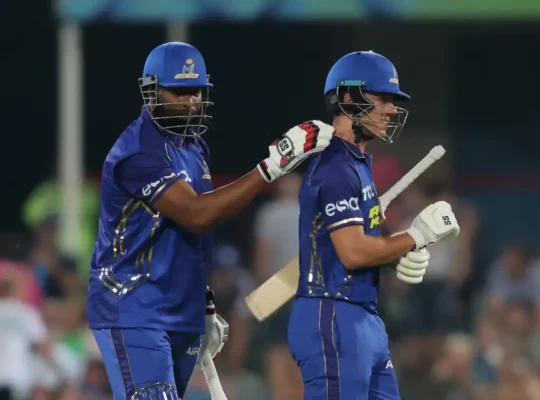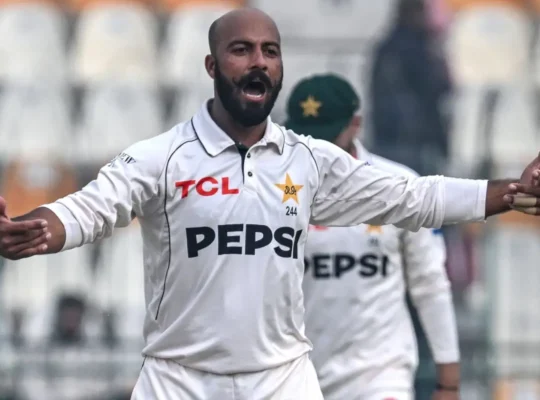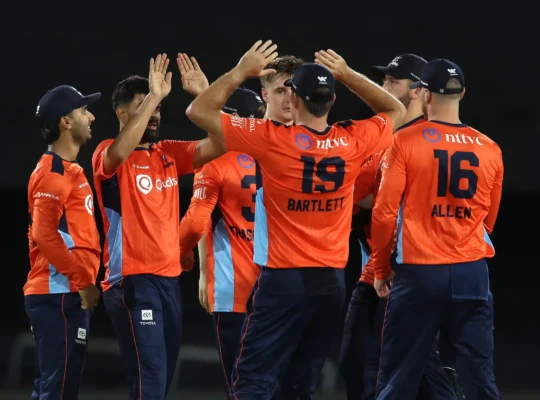

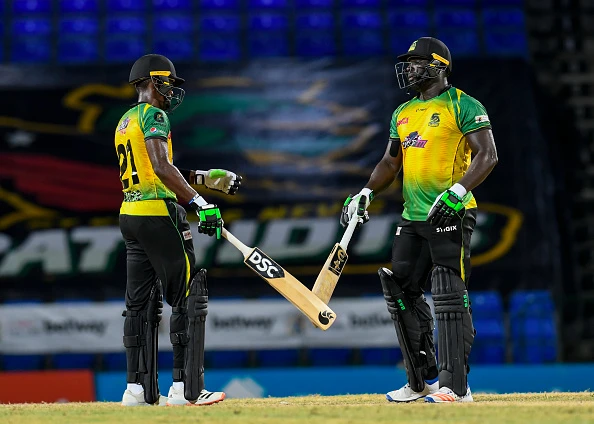
Desert Vipers dismantled San Francisco Unicorns by nine wickets in Match 7 of the Global Super League 2026, chasing down 152 with more than three overs unused. The result belonged to one man in particular: Zachary Carter, whose 29-ball 55 turned a routine run chase into a statement of intent inside the Powerplay. For a Vipers side that had won just once in three previous outings, this was the kind of dominant, low-risk victory that can shift momentum heading into the business end of the group stage.
Here’s everything that happened at Providence Stadium, Guyana — and what it means for both teams going forward.
Match Snapshot
| Detail | Information |
| Tournament | Global Super League 2026 |
| Match | Match 7 |
| Venue | Providence Stadium, Guyana |
| Date | Tuesday, 28 July 2026 |
| Toss | San Francisco Unicorns chose to bat |
| First Innings Score | San Francisco Unicorns 151/7 (20 overs) |
| Second Innings Score | Desert Vipers 152/1 (16.1 overs) |
| Result | Desert Vipers won |
| Winning Margin | 9 wickets (23 balls remaining) |
| Standout Performer | Zachary Carter (55 off 29 balls) |
| Current Points Position | See standings table below |
Match Summary
San Francisco Unicorns never found a gear beyond steady accumulation. Connor Esterhuizen and Tim Robinson built a workmanlike opening stand, but the innings lacked a second wave of acceleration once wickets began falling through the middle overs. A total of 151 looked competitive on paper but never carried genuine pressure once Desert Vipers began their reply.
That pressure evaporated within the first four overs of the chase. Carter’s assault on the opening bowlers effectively decided the contest before the tenth over, and everything that followed — Saiteja Mukkamalla’s calm accumulation, Rilee Rossouw’s clean hitting — was about managing a game that was already won rather than chasing one down. The gap between the two sides wasn’t talent; it was intent. Desert Vipers attacked from ball one, while the Unicorns spent too long consolidating.
First Innings Analysis
San Francisco Unicorns’ innings can be split into three phases, and only the first one worked in their favour.
The opening stand: Esterhuizen and Robinson added a measured 50-run partnership, giving the Unicorns exactly the platform a T20 side wants — wickets in hand, a run rate ticking over, and time to accelerate later.
The middle-overs stall: That acceleration never arrived. The Unicorns reached 100 in 13.4 overs but lost wickets in clusters from there — Esterhuizen, Robinson, Ollie Peake and Hassan Khan all departed inside a stretch that strangled any momentum.
The finish: Two more wickets fell in the 17th over alone, and although Anirudh Immanuel’s late hitting lifted the total to 151/7, the Unicorns never threatened to push past a total the Vipers would consider gettable inside 18 overs, let alone the 16.1 it eventually took.
The missed opportunity was clear: with 10 wickets in hand at the halfway mark, San Francisco needed a platform-to-launch transition in overs 11–16 that simply didn’t happen.
Desert Vipers Chase
Desert Vipers’ reply was built on a simple plan — take the Powerplay by force, then coast. It worked to perfection.
Powerplay dominance: The Vipers raced to 63 without loss inside six overs, effectively taking the game away from San Francisco before the bowlers had settled into a rhythm.
Zachary Carter’s explosive batting: Carter’s innings set the tone for everything that followed, reaching fifty from just 26 deliveries.
Saiteja Mukkamalla’s composed innings: With the platform secure, Mukkamalla played the anchor, finishing unbeaten on 52 from 42 balls and ensuring there was never a hint of a collapse.
Rilee Rossouw’s finishing role: Rossouw came in and simply accelerated, adding 38 off 26 balls to close out the chase with minimal fuss.
Why the chase looked effortless: Losing only one wicket in the entire innings meant Desert Vipers never had to reset or rebuild. One dismissal, one carefully managed middle phase, and the target was gone.
Zachary Carter Changes the Game
Carter’s innings deserves attention beyond the scoreline. Facing new-ball bowling at a venue where 150 is a par-plus total, he took the attacking option from the very first over rather than waiting to assess conditions.
His 55 came from 29 balls with seven fours and three sixes — a boundary in roughly six of every ten deliveries he faced, an extraordinary rate for an opener against a fielding side with something to defend. What stood out tactically was his shot selection: rather than manufacturing risk, Carter targeted length deliveries into the “V” and punished anything short with clean pull shots, meaning the bowlers had almost no safe area to bowl into.
Strike rotation mattered just as much as the boundaries. Even in the overs where he wasn’t hitting fours, Carter kept working the ball into gaps, which meant San Francisco’s bowlers could never settle into a defensive line. By the time Anirudh Immanuel finally removed him in the ninth over, the Vipers were already 74 for the loss of just that one wicket — the match, in effect, already decided.
Saiteja Mukkamalla and Rilee Rossouw Finish in Style
With the platform Carter provided, Mukkamalla and Rossouw faced none of the pressure that usually defines a run chase. Their unbeaten stand was built on situational awareness rather than aggression for its own sake — Mukkamalla content to rotate strike and pick off the bad ball, Rossouw looking to accelerate once he’d taken a few deliveries to assess the bowling.
Running between the wickets was sharp throughout, keeping the scoreboard moving even in overs without a boundary, which meant San Francisco’s bowlers had no natural pressure point to build around. There was no need for late drama; the pair simply closed the game out with 23 balls unused, a comfortable, low-risk finish befitting the position Carter had put them in.
Why San Francisco Unicorns Lost
- Slow middle-overs scoring — the transition from 50 to 100 ate up too many deliveries without building toward a launch phase
- Lack of acceleration — no batter beyond the opening pair scored quickly enough to lift the total past 170
- Clustered wickets — losing three batters between overs 12 and 15 removed any chance of a late surge
- Powerplay bowling errors — Carter was allowed too many scoring options early, setting the tone for the entire chase
- No wicket-taking response — once the Vipers’ opening stand got away, San Francisco couldn’t manufacture a breakthrough until the ninth over
- Fielding under pressure — with the required rate never a factor, small fielding lapses in the Powerplay compounded an already difficult position
Tactical Analysis
San Francisco’s decision to bat first was reasonable on a good surface, but their bowling plans in the Powerplay didn’t account for Carter’s intent — length deliveries were driven and pulled with ease, and there was little variation in pace to disrupt his timing.
Desert Vipers, by contrast, showed clear tactical discipline. Sending Carter to attack from over one meant any wicket lost early would still leave time to rebuild; instead, the gamble paid off completely. Once the total was under control, the middle order simply played situational cricket rather than forcing the pace — a low-risk approach that never let San Francisco back into the contest. The Vipers’ bowlers also deserve credit for the wicket clusters they forced in the Unicorns’ innings, which ultimately kept the target within easy reach.
Match Statistics
- Highest scorer: Zachary Carter — 55 off 29 balls
- Best strike rate (qualifying innings): Zachary Carter — 189.65
- Highest partnership: Mukkamalla–Rossouw, unbeaten 78 off 48 balls
- Powerplay score (Desert Vipers): 63/0 in 6 overs
- Winning run rate: Desert Vipers chased at 9.40 runs per over
- Boundaries: Carter struck 7 fours and 3 sixes in his innings alone
- Sixes: 5 combined between Carter and Rossouw
- Winning margin: 9 wickets, with 23 balls to spare
Top Performers
| Player | Team | Performance | Impact | Rating (/10) |
| Zachary Carter | Desert Vipers | 55 (29 balls) | Set the tone with a match-defining Powerplay assault | 9.5 |
| Saiteja Mukkamalla | Desert Vipers | 52* (42 balls) | Anchored the chase without ever losing control | 8.5 |
| Rilee Rossouw | Desert Vipers | 38* (26 balls) | Closed out the game with clean, low-risk hitting | 8 |
| Connor Esterhuizen | San Francisco Unicorns | Fifty in the opening stand | Gave the Unicorns their only period of control | 7 |
| Anirudh Immanuel | San Francisco Unicorns | Dismissed Zachary Carter | Delivered the only real breakthrough of the chase | 6.5 |
Turning Points
- The Powerplay assault — Carter’s early aggression put Desert Vipers 63 without loss inside six overs, removing any pressure from the chase before it began.
- The middle-overs wicket cluster — San Francisco losing three batters between overs 12 and 15 killed their momentum just as they needed to accelerate.
- Carter’s dismissal changing nothing — Immanuel’s breakthrough in the ninth over should have been a foothold, but the total was already beyond reach.
- The Mukkamalla-Rossouw stand — an unbroken 78-run partnership ensured there was never a window for a comeback.
Tournament Impact
This result matters beyond one match. For Desert Vipers, it’s the kind of net-run-rate-boosting win that can be decisive in a tight group stage, given how emphatically they chased down the target. For San Francisco Unicorns, a batting effort that stalled through the middle overs is the clearest area to address before their next fixture.
With the group stage still unfolding, every net run rate swing counts toward the race for the knockout places, and a nine-wicket win with overs to spare is about as strong a swing as a team can produce in a single match.
Global Super League Standings
| Team | Played | Won | Lost | Points |
| Guyana Amazon Warriors | 3 | 3 | 0 | 6 |
| Lahore Qalandars | 3 | 2 | 1 | 4 |
| Desert Vipers | 3 | 1 | 2 | 2 |
| San Francisco Unicorns | 3 | 1 | 2 | 2 |
| Perth Scorchers | 2 | 0 | 2 | 0 |
Guyana Amazon Warriors remain the pace-setters with a perfect record, while Lahore Qalandars sit comfortably in the second qualification spot. Desert Vipers and San Francisco Unicorns are locked together on points, meaning net run rate could prove decisive between them if the group stays tight. Perth Scorchers, still without a win, face the most pressure to turn results around quickly.
Leading Run Scorers
| Rank | Player | Mat | Runs | SR | 6s |
| 1 | Hammad Azam | 3 | 146 | 140.38 | 11 |
| 2 | Rahmanullah Gurbaz | 3 | 127 | 178.87 | 10 |
| 3 | Tim Robinson | 3 | 108 | 145.95 | 4 |
| 4 | Rilee Rossouw | 3 | 108 | 125.58 | 1 |
| 5 | Farhan Yousaf | 3 | 100 | 169.49 | 9 |
Hammad Azam holds the overall run-scoring lead, but Rahmanullah Gurbaz’s near-179 strike rate makes him the tournament’s most destructive top-order presence so far. Rossouw’s tally, boosted by Match 7’s unbeaten finishing knock, keeps him firmly inside the top five.
Leading Wicket-Takers
| Rank | Player | Mat | Wkts | BBI | SR |
| 1 | Shadab Khan | 3 | 7 | 4/13 | 6.86 |
| 2 | Usama Mir | 3 | 7 | 4/23 | 6.86 |
| 3 | Gudakesh Motie | 3 | 6 | 4/15 | 12.00 |
| 4 | Ghulam Mudassar | 3 | 6 | 4/32 | 9.00 |
| 5 | Brody Couch | 2 | 5 | 3/49 | 9.60 |
Shadab Khan and Usama Mir are tied atop the wicket charts with identical strike rates, underlining how heavily spin has influenced this year’s tournament. Gudakesh Motie isn’t far behind, and with the group stage entering its middle phase, the bowling race looks set to stay just as tight as the table itself.
Key Takeaways
- Desert Vipers won by nine wickets, chasing 152 with 23 balls unused.
- Zachary Carter’s 29-ball 55 was the single biggest factor in the result.
- San Francisco Unicorns’ middle-overs collapse cost them a competitive total.
- Desert Vipers lost only one wicket in the entire chase.
- Saiteja Mukkamalla’s unbeaten 52 anchored the innings after Carter’s dismissal.
- Rilee Rossouw’s 38* off 26 balls sealed the win without late drama.
- The Powerplay proved decisive, with Desert Vipers reaching 63/0 inside six overs.
- Guyana Amazon Warriors remain unbeaten and clear at the top of the table.
- Desert Vipers and San Francisco Unicorns are now level on points.
- Net run rate is shaping up as a key differentiator in the race for the knockouts.
FAQs
Who won Desert Vipers vs San Francisco Unicorns? Desert Vipers won by nine wickets, chasing down 152 in 16.1 overs.
Who scored the highest runs in the match? Zachary Carter top-scored with 55 off 29 balls for Desert Vipers.
How many runs did Zachary Carter score? Carter scored 55 runs from 29 balls, including seven fours and three sixes.
Who finished the chase for Desert Vipers? Rilee Rossouw finished the chase unbeaten on 38, alongside Saiteja Mukkamalla’s unbeaten 52.
What is the latest Global Super League points table? Guyana Amazon Warriors lead with 6 points, followed by Lahore Qalandars on 4, with Desert Vipers and San Francisco Unicorns tied on 2 points each.
Who are the leading run scorers in GSL 2026? Hammad Azam leads with 146 runs, ahead of Rahmanullah Gurbaz and Tim Robinson.
Who are the leading wicket-takers in GSL 2026? Shadab Khan and Usama Mir are tied at the top with 7 wickets each.
What is next for Desert Vipers? Desert Vipers will look to build on this momentum and climb the points table as the Global Super League group stage continues.
Desert Vipers’ nine-wicket win over San Francisco Unicorns was as clinical as T20 cricket gets, built entirely on Zachary Carter’s explosive start and finished off without fuss by Mukkamalla and Rossouw. For a Global Super League table this tight, a result this dominant carries weight well beyond two points — it’s a statement of form heading into the next round of fixtures, and a reminder to San Francisco Unicorns that middle-overs momentum is non-negotiable in this format.